Home
search icon Book Appointment

Main navigation

  • GET STARTED
    • Why Rose
    • What to Expect
    • FAQ / INSURANCE
  • YOUR TEAM
  • What We Do
    • Services
    • BLOG
  • Locations
  • Shop
  • Contact Us

Anonymous's blog

Using the Granby roll whole body stretch to improve mobility in physical therapy ">Using the Granby roll whole body stretch to improve mobility in physical therapy

The Granby roll, also known as a shoulder roll, is a wrestling technique and a whole body physical therapy stretch that incorporates your back, neck, core and hips. 

The Granby Roll or Shoulder Roll

The first time I saw a higher belt do a Granby roll, I thought, that doesn’t look too hard. I go upside in yoga all the time, and the Granby roll or Shoulder roll can appear even easier than yoga moves. However, the Granby roll is a physical therapy technique that can be challenging for most people.

A Granby roll in the wrestling-related martial art of Brazilian jiu jitsu (BJJ) is used as a guard retention technique that involves inverting to make enough space to put your legs between you and your opponent. That is about all I have to say on it from a jiu-jitsu perspective, as I am not very good at doing it live. The only situation right now I can consistently Granby is turning away from a passer and attempting to get my guard back. I’m working on it, though!

From a biomechanics standpoint, the Granby roll is standing on the thickest part of the shoulder blade, with the back of the head as a balancing point, using your core, hips, and head to change or adjust your direction. The spine of the shoulder blade acts as a load bearing structure.
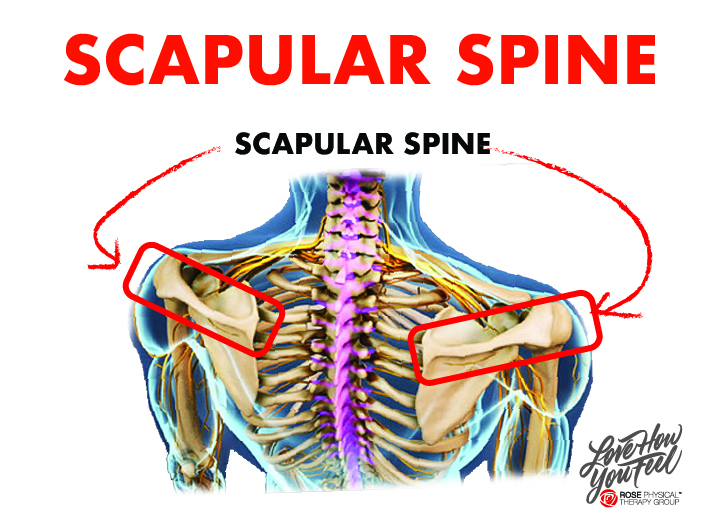
scapular spine back physical therapy in washington dc navy yard & capitol hill

The first time anyone tries to Granby roll, it’s not pretty. It’s like watching a turtle trying to right itself – at least, that’s what it feels like. When I did it right the first time, it was the most awful stretch I had ever felt and wanted out of it immediately.

How the Granby roll or Shoulder roll works

The nerves that come out of the spinal cord run down your back, hips, and back of the legs. These nerves, combined with the back muscles, hips, hamstrings, and calves, is what’s commonly known as the posterior chain.
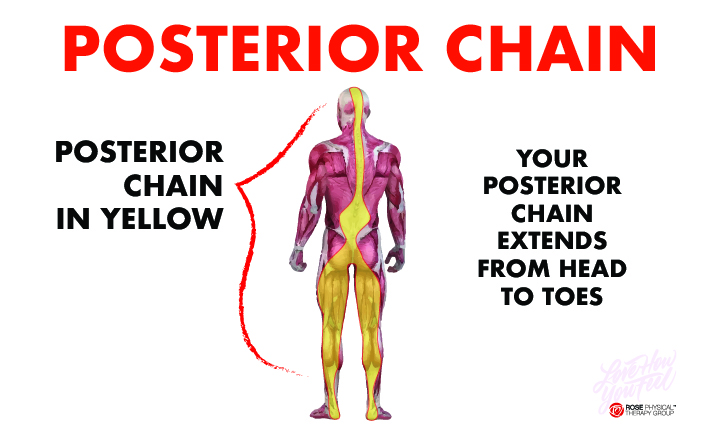
posterior chain back pain physical therapy in washington dc navy yard & capitol hill


Nerves don’t stretch like muscle. Muscles have more elastic properties and stretch like rubber bands. Nerves are not stretched, but tensioned like twine. That is, they do not feel like anything until suddenly, you feel a huge pull when inverted.

Here are some exercises I used to work on my neurodynamic mobility:

  1. Press-ups, or standing backbends

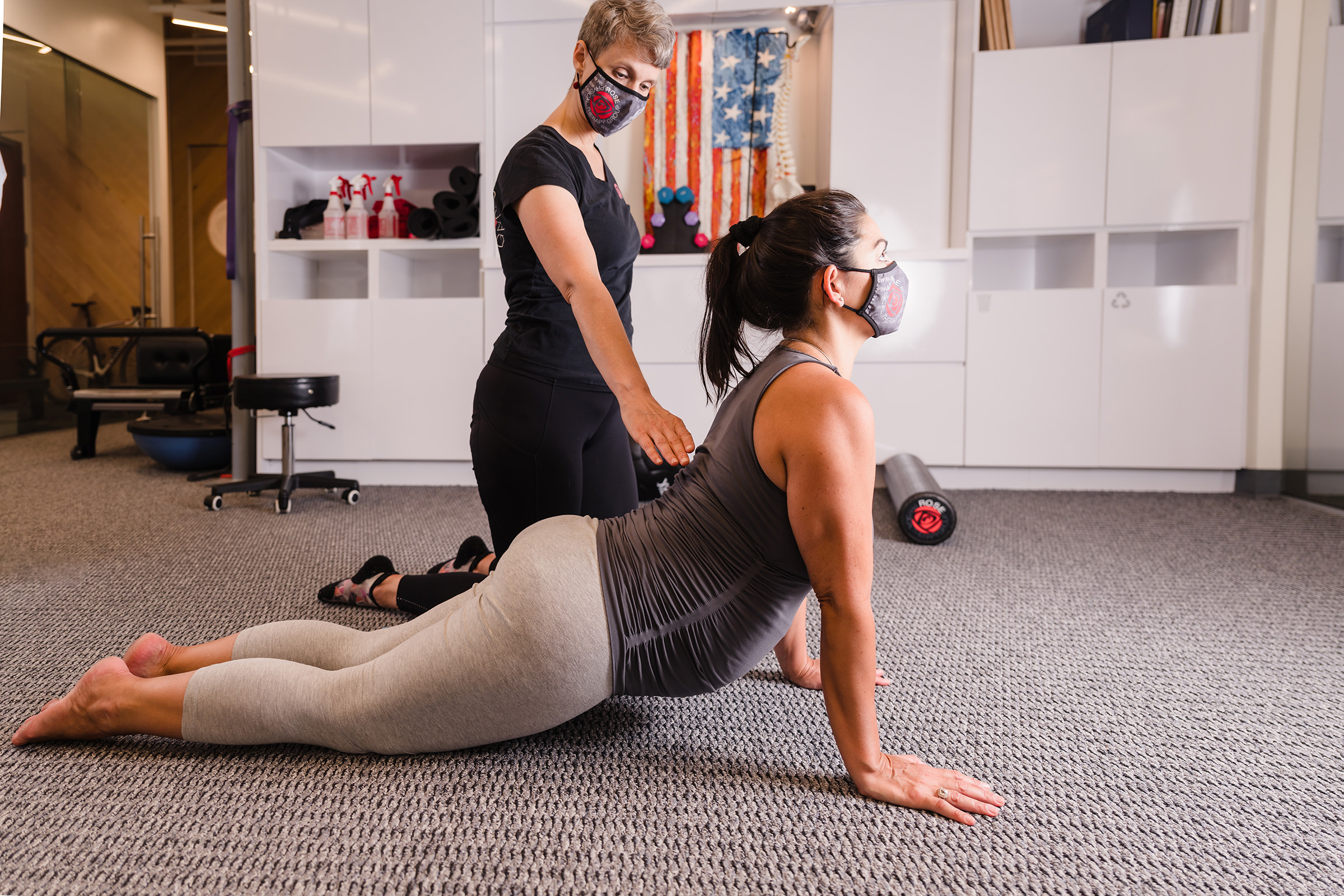
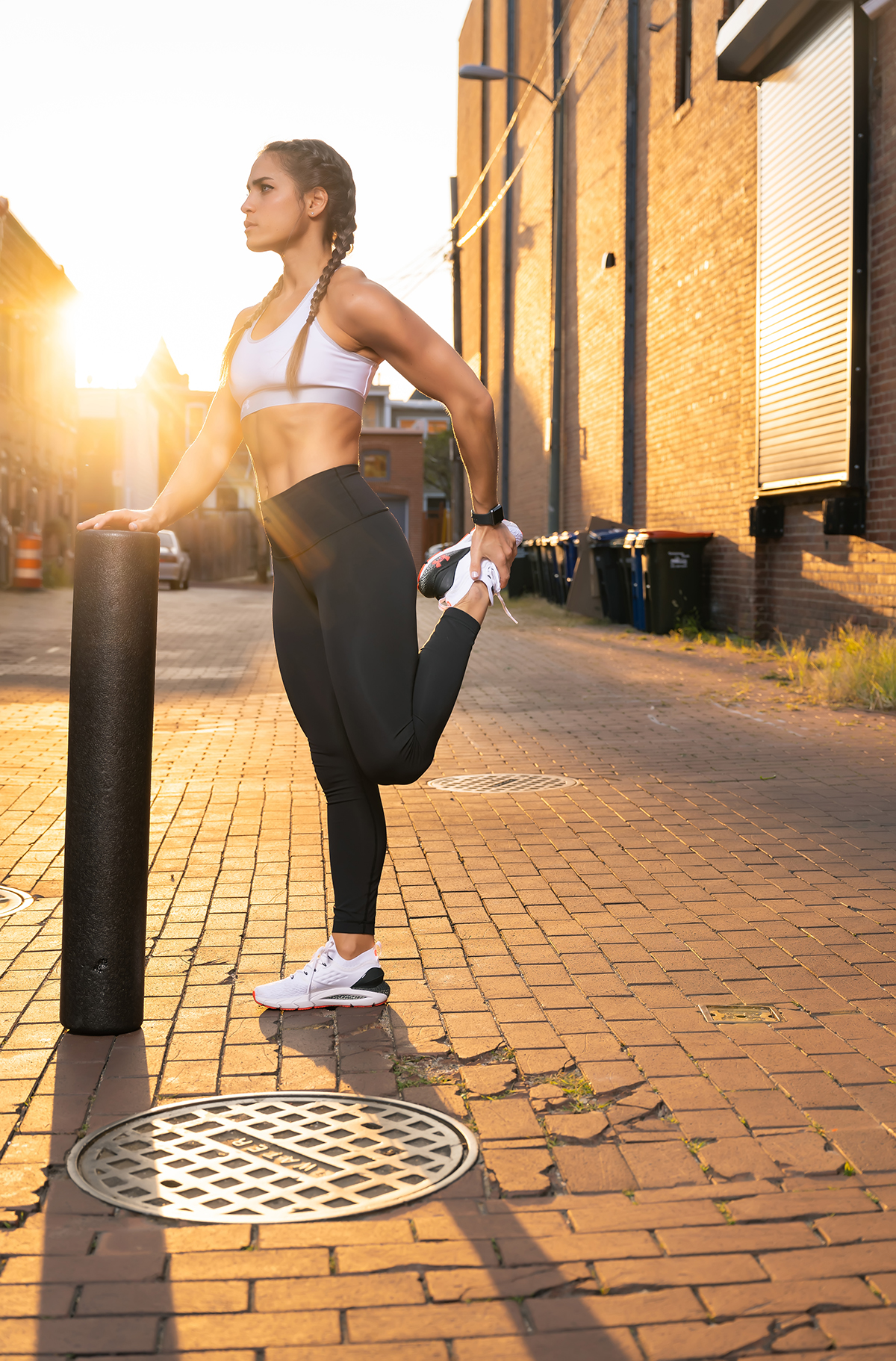
The standing back bend is an intense exercise for your posterior chain and can be too much load for many people. If the standing back bend causes discomfort, consider doing a pressup instead.


  1. Posterior chain stretch with elevated toes


  1. Seated posterior chain stretch


Rose Physical Therapy is here in Washington, DC to help!

If you have back pain or want to work up to doing a Granby roll, it's a great time to give us a call to setup an appointment right away, or schedule through our website. Either our office in downtown Washington, DC between Dupont Circle and Farragut Square, or at our office in Navy Yard and Capitol Riverfront, just a few blocks from Capitol Hill has the best area physical thearpists who are capable of getting you on the track to recovery. One on one appointments at Rose are one-hour with a physical therapist, never a technician. And Rose Physical Therapy in Washington, DC accepts most private health insurance so that the best physical therapy is also affordable for you based on your insurance plan.

Read more about Using the Granby roll whole body stretch to improve mobility in physical therapy

Using physical therapy to improve functional mobility for golf ">Using physical therapy to improve functional mobility for golf

Three physical therapy exercises to improve back pain for golf are supine flexion (moving arms up and down), horizontal adductions (hugs), and rotations, all on a foam peanut accupoint massager.

Golf is a sport surrounded by ongoing frustration yet immense reward. I have been very familiar with these ups and downs of the sport as I have been playing golf since the age of four when I used to steal my father’s golf clubs in the back yard. After becoming a Physical Therapist, I now have a different outlook on how I play to maximize my ability to have a successful round while also minimizing risk for injury. One of the most critical areas that have maximized my success, is focusing more on my thoracic or mid back mobility.

What is thoracic mobility?

The thoracic spine, which starts at the bottom of the neck and ends where your ribs end, moves in three planes. These include forward and backwards, side to side and rotation. In daily life, most of our thoracic mobility is done in the forward and back plane. In golf however, maximal thoracic rotation is needed to reach peak power and to square up to the ball properly.

Exercises for thoracic mobility

One of my favorite exercises is using a peanut, or two tennis balls in a sock, to maximize motion. First, while lying on your back, position the peanut between the shoulder blades with the downward slope around the bony part of spine. Next, perform arm movements up and down, across the body and rotation for 10-15 repetitions of each.


These three simple motions can help maximize functional mobility in the joints of the spine leading to increased rotation and therefore increased power when striking the ball. If restrictions are present leading to limited motion, increased stress is put into the cervical spine, lumbar spine and shoulders to make up for those limitations. This in turn can lead to increased risk of injury in these areas.

Rose Physical Therapy is here in Washington, DC to help!

If you ongoing restrictions or pain while golfing, consider getting a full assessment on what can be done to make you more successful and injury free out on the golf course. Either our office in downtown Washington, DC between Dupont Circle and Farragut Square, or at our office in Navy Yard and Capitol Riverfront, just a few blocks from Capitol Hill has the best area physical thearpists who are capable of getting you on the track to recovery. One on one appointments at Rose are one-hour with a physical therapist, never a technician. And Rose Physical Therapy in Washington, DC accepts most private health insurance so that the best physical therapy is also affordable for you based on your insurance plan.

Read more about Using physical therapy to improve functional mobility for golf

Easy 20 minute workout for runners ">Easy 20 minute workout for runners

Easy 20 Minute Workout for Runners

Strength training is very important for runners to help prevent future injuries.

I have now been running for a while and I have also seen many runners with injuries. There are often common weak spots in the running chain that makes them more susceptible to injuries if running is the primary mode of exercise. While running is a great form of exercise, if one only focuses on running and does not incorporate some basic strengthening from time to time, they are more likely to get injury and will find it harder to recover from an injury if they do have one.

Often the same areas of weakness are seen on runners and the same patterns of weakness lead to very similar injury presentations. Many of the problems that are commonly associated with running include pain in the hips, irritation of the IT band or the kneecap and often the Achilles. Many of these issues can in part be due to foundational weakness in the core muscles and the muscles around the hip that help to stabilize the pelvis and legs while running. I will often prescribe a variation of core and hip strengthening exercises to help address the problem areas. While there are several great exercises that can be done to address the areas of weakness, I know that most people may not have the time to complete exercises that take over 30 minutes and finding a smaller list a few exercises may be more realistic.

When I don’t feel like a long work out or I am traveling these are some of the exercises I really like, and feel are helpful. I try to pick a handful of exercises to target the areas that are important to providing stability during running and can easily be neglected otherwise to improve strength and reduce the risk for injury. There are many exercises that could be included with the purpose of a short workout and even more if a resistance band is included. I have included some of my favorite exercises below.


Core

  • Russian twists

Legs

  • Side lying hip abduction

  • Lunges

  • Squats – double or single leg

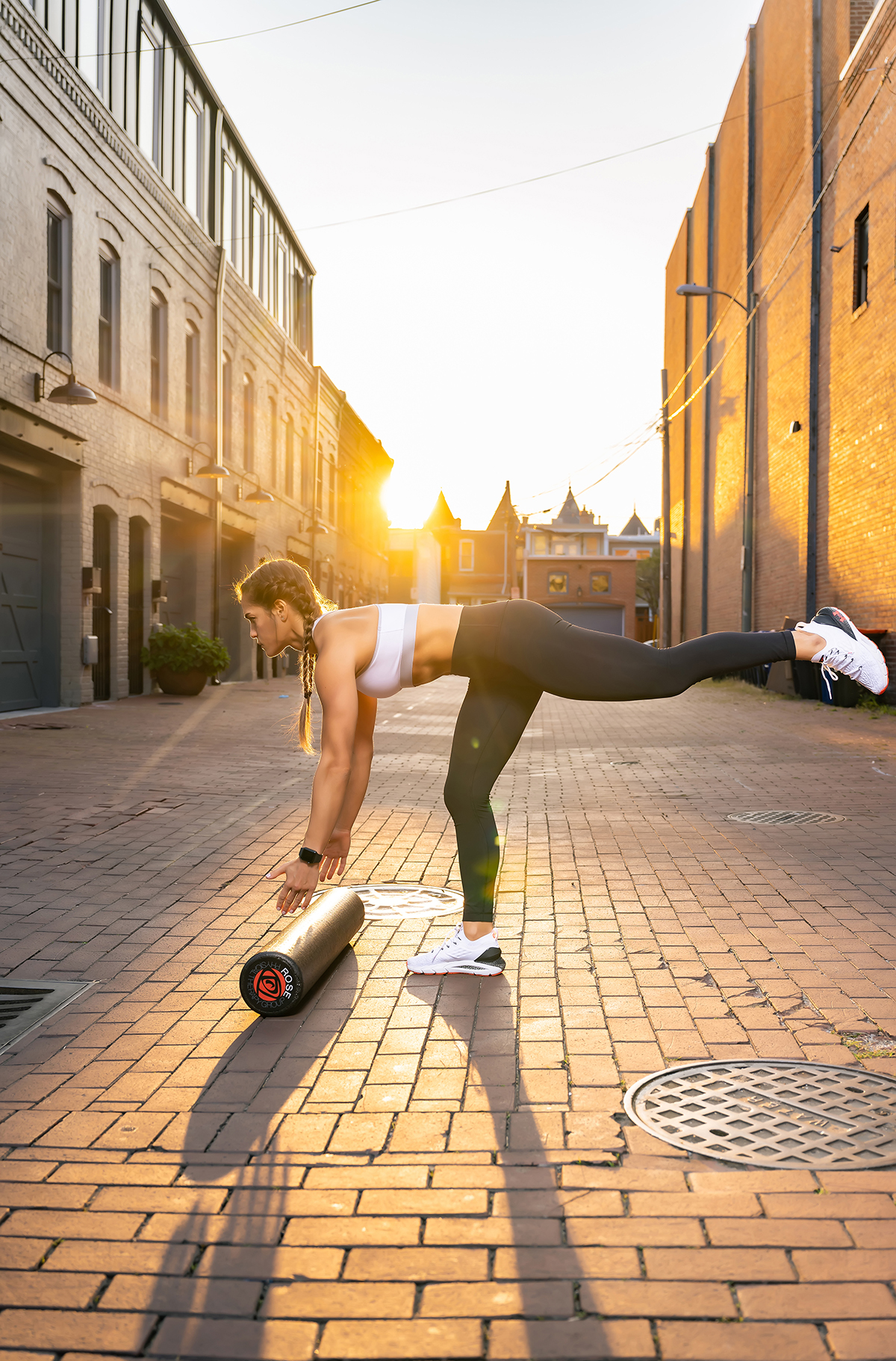
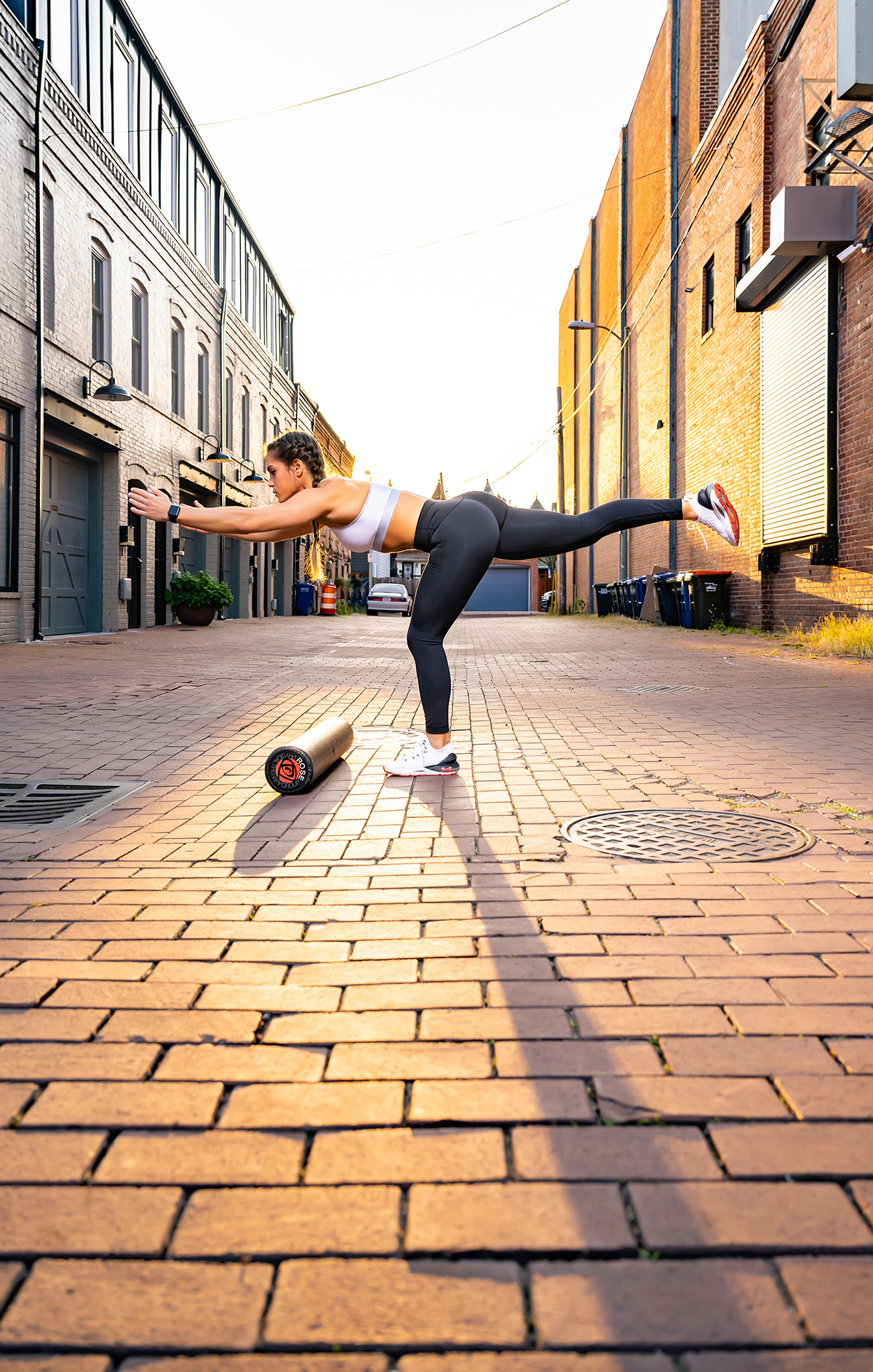
  • Single leg deadlifts, also known as hip hinges

These are some of my favorite exercises to perform for a short workout especially when I am traveling and don’t have a lot of time. These exercises are more foundational and do not require equipment. All of these can be progressed to be more challenging with the addition of weights or resistance bands once the basics have been learned. While the performance of these exercises will not guarantee that an injury can be prevented, they will make it less likely and hopefully easier to recover if an injury does arise.

Rose Physical Therapy has the best PT in Washington, DC to help!

If you have any signs of injury or just want to improve your running strenght and efficiency, igive us a call to setup an appointment right away, or schedule through our website. Either our office in downtown Washington, DC between Dupont Circle and Farragut Square, or at our office in Navy Yard and Capitol Riverfront, just a few blocks from Capitol Hill has the best area physical thearpists who are capable of getting you on the track to recovery. One on one appointments at Rose are one-hour with a physical therapist, never a technician. And Rose Physical Therapy in Washington, DC accepts most private health insurance so that the best physical therapy is also affordable for you based on your insurance plan.
Read more about Easy 20 minute workout for runners

Adjusting to a new workout routine ">Adjusting to a new workout routine

washington dc

Three things you should do in changing workout routines are to adjust your workout variables, do not overtrain, and work with a physical therapist to learn healthy movements and avoid injuries.

Since the COVID-19 pandemic, we have seen an increasing number of clients who are changing workout routines without taking steps to avoid injury. While that new online workout might seem harmless, you should take the appropriate steps to prepare for it so that you can have fun and avoid injuries.

As someone who typically attended group fitness classes, I have transitioned to working out alone from home, often in front of workout videos posted online or live workouts shared on social media. I realized these new workouts placed different stresses on my body. My muscles hurt more, and I felt increasing amounts of discomfort in areas which I found to be strange given that all I was doing was body weight workouts. I realized that the variety of exercises that rely only on body weight for resistance can be limited, leading to repetitive stress on my body.

Adapting to new workout routines

The best way to approach your new workout routine, sport or exercise is to do it conservatively. Three ways to make your new workout routine better are to adjust your workout variables, do not overtrain, and work with a physical therapist to learn healthy movements and avoid injuries.

1. Adjust your workout variables.

Adjusting your workout intensity may include changing the number of repetitions, weight or resistance, and time. You may also wish to change the frequency of workout and the kinds of workouts you do.

2. Make your next workout the most important one.

A good way to avoid overexertion or overtraining is to prioritize your next workout. Excitement for a new sport, exercise routine or activity can spur us to do more than we might be physically ready for. But working out too hard can prevent us from working out in the future. A long warmup and warm down are not signs of weakness, but of maturity in knowing your body. The purpose of a warmup is to get ready for your workout, and the purpose of a warm down is to make sure you stay fresh and not injured.

3. Work with a physical therapist.

A Rose physical therapist can help you understand healthy movements. If something doesn’t feel right, do not feel obligated to push through it. This is especially true when completing workout videos where the instructor is unable to adjust or modify your form. If you have questions, you can reach out to whoever designed your workout directly, or you can work with a physical therapist who has a doctorate level understanding of your muscle physiology and can ensure that you will not injure yourself.

Working with a physical therapist at Rose can also help you understand different equipment choices, such as which shoes to wear. A physical therapist at Rose can help analyze your tennis swing, your golf swing, or perform running analysis to help you improve your gait and efficiency, and avoid injury.

A physical therapist can also identify points of weakness that might lead to injury in your new sport. For instance, a triathlete is good at straight line motion but might be injured playing a ball sport or something with lateral movement.

washington_dc_pelvic_floor_physical_therapy_maternity_baby37.jpg

The physical therapist should be the key component to enjoying a change of exercise routine, or a new sport. With the perfect combination of knowledge and skills, your physical therapist at Rose can help you prevent injuries and maximize your enjoyment of that new sport. It’s also a lot easier to prevent injuries from happening than to deal with them after they happen, so if you have any questions do not hesitate to reach out to your physical therapist here at Rose in Washington, DC. 

It is important to note that a physical therapist is not a personal trainer. Personal training is coaching you through movements and designing your overall fitness plan. Your physical therapist can help you understand movements and avoid injuries. Although there is some overlap in learning the right movements, the physical therapist is really your movement expert but is not intended to replace the fitness coaching by your personal trainer--at least not at Rose Physical Therapy. 

Rose Physical Therapy is here in Washington, DC to help!

If you are changing your workout routine, now is a great time to give us a call to setup an appointment, or schedule through our website. Either our office in downtown Washington, DC between Dupont Circle and Farragut Square, or at our office in Navy Yard and Capitol Riverfront, just a few blocks from Capitol Hill has the best area physical therapists who are capable of getting you on the track to recovery. One on one appointments at Rose are one-hour with a physical therapist, never a technician. And Rose Physical Therapy in Washington, DC accepts most private health insurance so that the best physical therapy is also affordable for you based on your insurance plan.
Read more about Adjusting to a new workout routine

Ergonomics tips for working from home ">Ergonomics tips for working from home

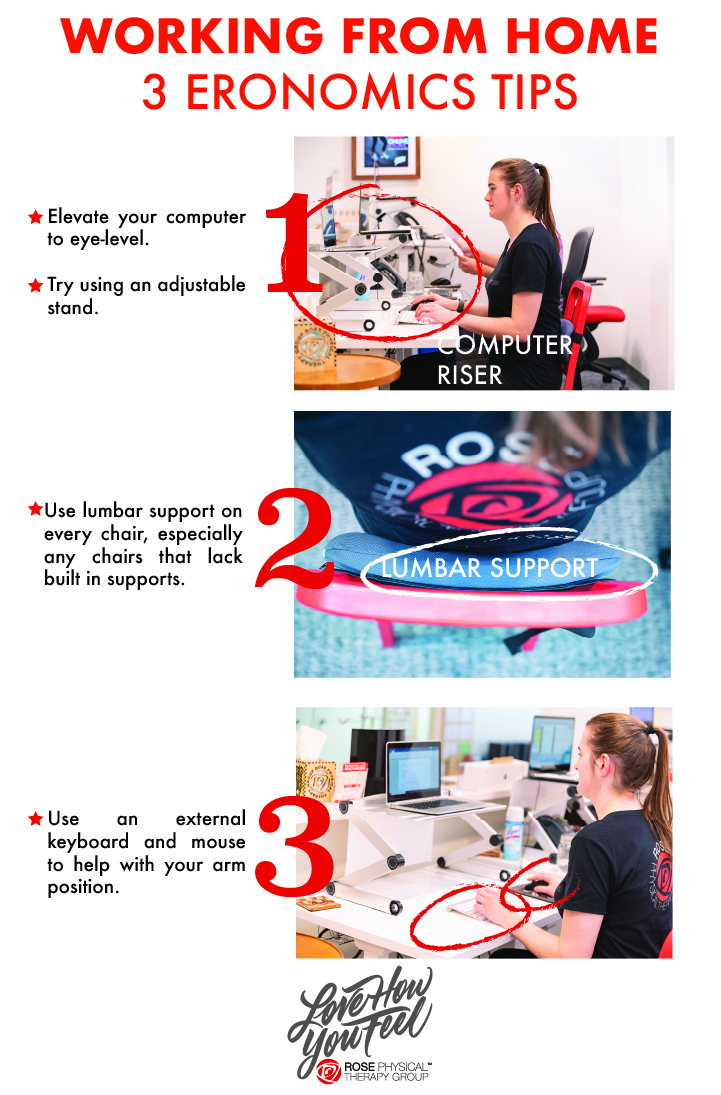
Three physical therapy ergonoimcs tips for working at home are the elevate your computer on a riser, use an external keyboard and mouse, and to use lumbar support.

During the past year, many of us have transitioned to teleworking part-time, or simply working from home. Going from a beautiful Washington, DC area office to your kitchen table, or often to your couch or bed, can take a toll on your ergonomics and result in neck and back pain, and more.

Whether you stick with an impromptu Washington, DC home office or have a more professional one, if you’re working from home for an extended period of time you will need to take ergonomics into account. Great ergonomics help you avoid having to come in for a physical therapy appointment. Although we’re glad to help you out here at Rose Physical Therapy in downtown Washington, DC, this blog entry details just a few quick and basic tips on setting up an ergonomics workstation for yourself.

Three ergonomics tips for working from home:

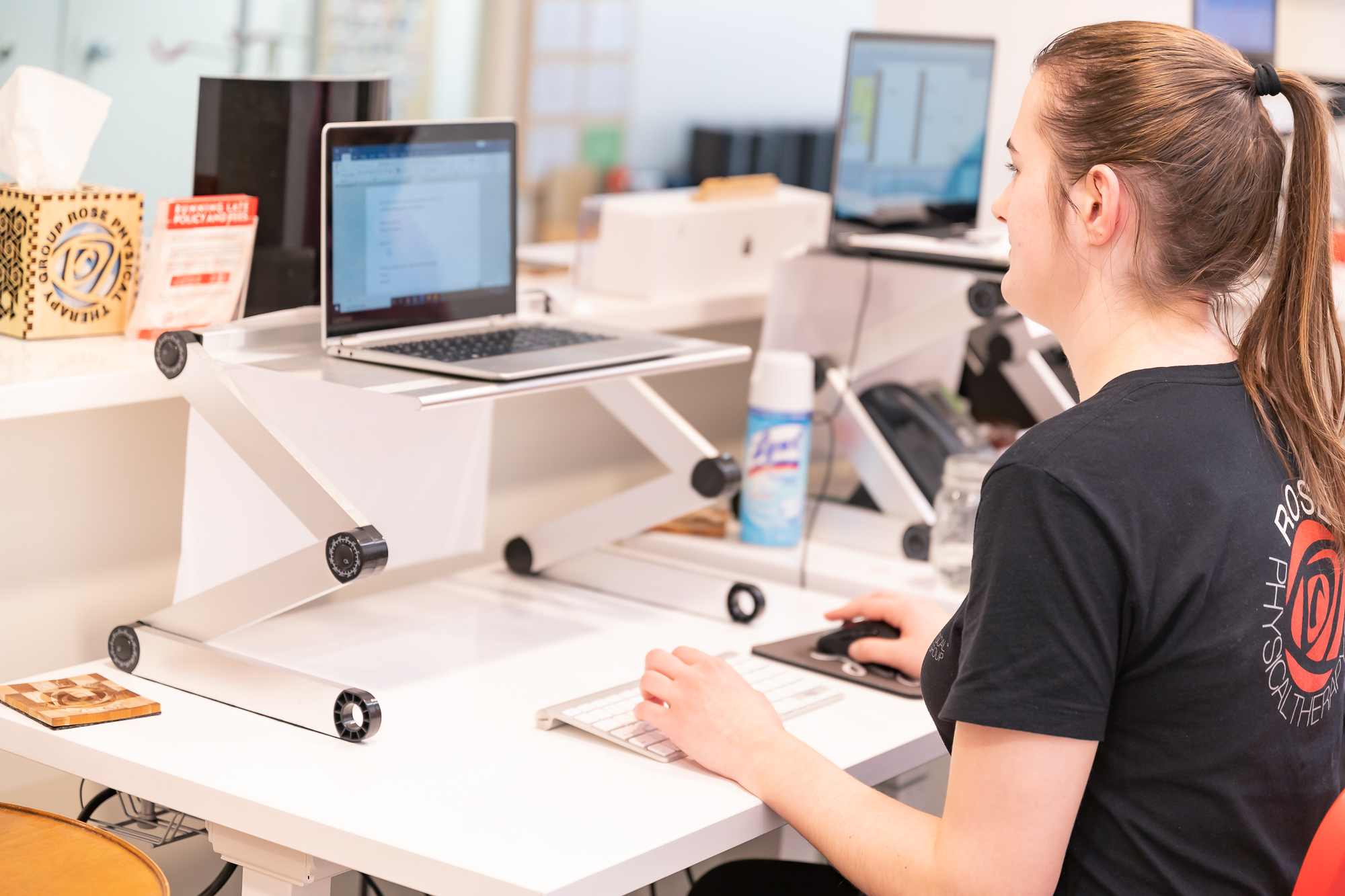
  1. Elevate your computer: keeping your screen closer to eye-level reduces the strain put on your neck. This can be difficult with a laptop so we recommend things like this adjustable laptop stand (insert link from Rose PT Store) or a couple of those old text books you might still have lying around.  Do people still have phone books?

  2. Use an external key board/mouse: laptops are great for convenience but not for long term work. To have it set up in a good position for your neck you have to sacrifice arm/wrist positioning or vice-versa. An external keyboard/mouse can help you to combat this by allowing a neutral position for your arms while your computer is elevated on something else.

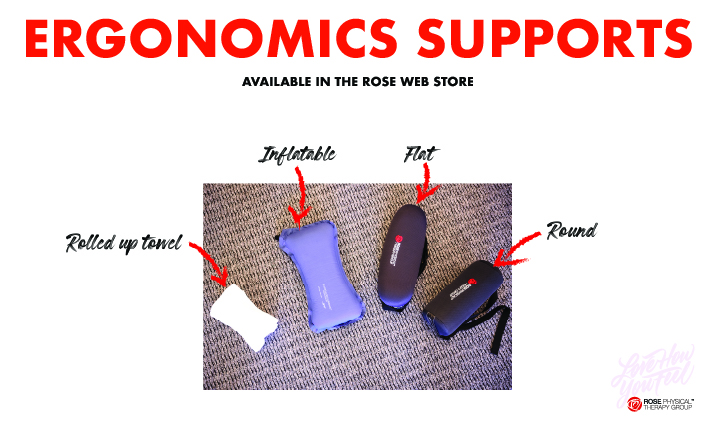
  3. Use lumbar support: the chair at your dining room table probably isn’t set up with a full day’s work in mind. Having good lumbar support can make all the difference. You can use a specially designed cushion like these (insert links from store here) or you can try rolling up a hand towel and resting it in the small of your back.

Washington dc ergonomics telework monitor height desk setup

Note that we have links to purchase several different computer risers and lumbar supports in our online store here on the Rose Physical Therapy website.

ergonomics_supports_chair_office_washington_dc-100.jpg

Rose Physical Therapy is here in Washington, DC to help!

If you have ergonomics questions, or maybe have back and neck pain, it may be time to give us a call to setup an appointment right away, or schedule through our website. Either our office in downtown Washington, DC between Dupont Circle and Farragut Square, or at our office in Navy Yard and Capitol Riverfront, just a few blocks from Capitol Hill has the best area physical therapists who are capable of getting you on the track to recovery. One on one appointments at Rose are one-hour with a physical therapist, never a technician. And Rose Physical Therapy in Washington, DC accepts most private health insurance so that the best physical therapy is also affordable for you based on your chosen insurance plan.

Read more about Ergonomics tips for working from home

Exercises to alleviate low back pain before and after trigger point dry needling ">Exercises to alleviate low back pain before and after trigger point dry needling

Two exercises we suggest before and after trigger point dry needling for low back pain include QL stretches and glute bridges.

We often hear people complain that their back is hurting. Friends, family, co-workers, almost everyone in the metropolitan Washington, DC area has encountered back pain at some point. Whether it’s from inactivity and sitting at our desks, bad posture, aging or degenerative changes, low back pain can stop you from enjoying life the way you should.

Tigger Point Dry Needling is a helpful tool for low back pain

We have also found that dry needling really helps with getting my back feeling better and hitting the reset button. Dry needling is a specialized tool that your Rose physical therapist can use to get down into the trigger points of the muscle and causes a twitch of the muscle which can release tension, improve range of motion, and reduce pain. Dry needling at Rose Physical Therapy is fast and the results can come quickly, usually within a couple of days.

Exercises are important after dry needling, in conjunction with Trigger Point Dry Needling

After dry needling, we still need exercises to ensure that our muscles stay loose and do not develop more trigger point problems. At Rose, we sometimes use two simple stretches that help our clients keep loose and pain free after a dry needling session.

QL Stretch in Doorway: Finding a doorframe and keeping your feet together, reach your arms up overhead and grab onto the doorframe, you should feel this stretch in your low back region. The QL muscle runs from your last rib to the top of your iliac crest or hip bone in the back.


Bridges: Laying on your back, contract your core by bringing your belly button toward your spine this will help tighten your natural back brace which are your abdominals. Then make sure you are breathing and not bearing down. Then use your glutes to bring your hips up toward the ceiling and back down.

When to see a physical therapist for low back pain?

While lower back pain is extremely common, it is not something you have to live with every day. Improving hip flexibility and core stability as well as lengthening the back muscles by stretching can help reduce the symptoms of lower back pain. However, if your back pain is chronic, it is time to make an appointment at Rose Physical Therapy Group.

Rose Physical Therapy is here in Washington, DC to help!

If you have lower back pain that has prompted you to read through this blog entry, it's probably time to give us a call to setup an appointment right away, or schedule through our website. Either our office in downtown Washington, DC between Dupont Circle and Farragut Square, or at our office in Navy Yard and Capitol Riverfront, just a few blocks from Capitol Hill has the best area physical thearpists who are capable of getting you on the track to recovery. One-on-one appointments at Rose are about one hour duration with a physical therapist, never a technician. Rose physical therapists are the best trained in the region. And Rose Physical Therapy in Washington, DC accepts most private health insurance so that the best physical therapy is also affordable for you based on your insurance plan.
Read more about Exercises to alleviate low back pain before and after trigger point dry needling

Physical therapy for a sprained ankle ">Physical therapy for a sprained ankle

Four physical therapy exercises to help recover from an ankle sprain are a 4-way ankle stretch, ABCs, clam shells, and balance challenge exercises.

Ankle sprains are common injuries that can occur for many reasons. During the winter months, slippery and icy sidewalks can make it hard to walk around the sidewalks in Washington, DC. Other factors that can lead to ankle sprains include various jumping tasks, playing sports, or even just walking on uneven surfaces.

The most common way people sprain their ankle occurs with ankle inversion, or when the ankle rolls with the bottom of the foot going towards the middle. This can jeopardize ligaments on the outer aspect of the ankle making the ankle bruise, swell, and give the person sensations of instability. It is important to rest and ice the ankle to help with the initial symptoms that will present following an ankle sprain, and physical therapy can play a critical role in getting you back to action.

Physical therapy perspective for treating an ankle sprain

When we evaluate a client with an ankle sprain, it is important to examine their strength and range of motion. Ankle sprains are graded in severity based on the amount of tissue that is torn. The severity of the sprain determines treatment.

For a very serious strain there is no choice but to rest the ankle and reevaluate as time passes, but this does not mean you cannot do physical therapy at the same time while your ankle heals. Your Rose physical therapist will work to strengthen the muscles and joints surrounding the ankle so that when you are ready to strengthen the ankle itself, your body is strong enough to do it.

If you are not sure about the grade of your strain, that is okay. The key decision is, if you cannot return to action within a couple of days, it may be time to schedule an appointment at Rose Physical Therapy.

Four physical therapy exercises for rehabbing a sprained ankle

After the ankle is ready for physical therapy, you Rose physical therapist will incorporate new exercises into your rehabilitation program, evaluating how you respond and adjusting as necessary. Here are four exercises that your physical therapist at Rose may incorporate into rehabilitating your sprained ankle:

  • 4-way ankle exercises: Use a resistance band to strengthen the ankle’s supporting muscles in its four directions: plantarflexion, dorsiflexion, inversion, and eversion.


  • ABCs: This is a non-weightbearing range of motion exercise that consist of moving your ankle into the letters of the alphabet. It can be done while laying down or sitting, making it an exercise that is very feasible to do throughout the day.


  • Clam shells: Start by laying on your side and bend your knees, but keep them stacked. From this position, lift your top knee off of your bottom knee, but avoid rotating your hips. This is a glute strengthening exercise. Research has shown that increasing glute strength can help with ankle stability.


  • Balance: Balance is a key part of rehabbing ankles. Start with single leg balance using the other leg as a “kickstand” to decrease the demand placed on the injured ankle. From this point, try to perform traditional single leg balance. Once you have mastered balance on a single leg, the next step is to challenge your balance by changing the surface (using an Airex balance pad) and/or closing your eyes.


Rose Physical Therapy is here in Washington, DC to help!

If you have an ankle sprain that is not getting better within two days, or if you have any questions at all, please reach out and schedule an appointment at one of our Washington, DC locations. We have two convenient locations in Washington D.C., one downtown between Farragut Square and Dupont Circle in Northwest DC, and one in the Capitol Riverfront adjacent the Navy Yard and only a few blocks from Capitol Hill. With many skilled physical therapists at Rose Physical Therapy, we’re here to help get you back on your…ankles….feet!

Read more about Physical therapy for a sprained ankle

Three exercises to improve your posture and ergonomics ">Three exercises to improve your posture and ergonomics

Three exercises that can help with your posture and ergonomics are open books, scapular retractions, and neck retractions or chin tucks.

Whether you are home because of COVID-19 or a regular teleworker, ergonomics is just as important as it is at your Washington, DC area office. However when the couch or bed is nearby, many of us forget how important following a physical therapy exercise program can be to our ergonomic happiness.

Posture and desk set up are very important when trying to decrease strain and pain into your neck, low back, shoulders and hips. Typically these are the role of an ergonomics specialist physical therapist at your Washington, DC office, often outsourced through human resources. At home we may not have this support and bad habits we develop at our offices become worse at home.

Ideally, if someone were to look at you from the side, the center of your ear should be over the center of your shoulder which is over the center of your hip. This creates a line column of support in your head, neck, shoulders, spine and through your hips to relieve tension and keep your body feeling better.

If your set up at home does not look like this, for instance if you are sitting slouched on the couch or in bed, then increased stress is placed into the joints and muscles. In a slouched position, your head competes against gravity rather than sitting on top of your shoulders. This leads to increased strain in the joints and overuse of the muscles in the back of neck and upper shoulders.

Three posture exercises for better posture

These three exercises can help put you in a better position and prime you to engage the proper muscles to decrease pain.

  1. Open book stretch

For the open book stretch, lie on one side and make sure to bend your hips and knees at 90 degrees. This will make sure that you are not rotating your lower back; avoiding rotating your lower back helps to isolate and accentuates thoracic rotation, which is the cause of many posture problems. Bring your arms straight into a 90 degree position of whatever side you are lying on. Bring your hand together and gently rotate with your arm and torso until you feel a stretch across your chest and/or your upper to the mid-back. Hold that position for approximately 10 seconds and repeat this stretch for two to three minutes on each side.

  1. Resisted external shoulder rotations or Scapular retractions

This motion consists of pinching the shoulder blades (scapula) together as if you were going to squeeze a pencil or finger placed between them in the center of your back. Place the band in your hands and raise your arms to about shoulder height. Relax the band, then create tension by squeezing the shoulder blades without shrugging your shoulders. Complete 3 sets of 10 reps in a session or as part of your warm up.

  1. Neck retractions

Assume a start position, whether sitting, standing or lying prone. Gently tuck your chin down toward your neck without jamming it toward your chest in a way that creates alignment but not a maximal position. Keeping your chin where it is, press your head back in a diagonal direction as though you are moving your head both backwards and up toward the ceiling. Feel the stretch at the back of your neck. Relax and repeat. If you are experiencing discomfort, try doing cervical retraction as many as 8-10 times, performing 3-4 sessions a day.

Together these exercises address mobility and stability of the shoulders and neck helping to minimize pain and put you in a better position to work. If you are still having nagging pain, give Rose PT a call so we are able to fully assess the root of the pain!

Rose Physical Therapy is here in Washington, DC to help!

Physical therapists at Rose in Washington, DC are ergonomic experts. We have helped everyone from office workers, to teleworkers, to a large number of embassy personnel from other countries. If you have questions about ergonomics, please schedule an appointment at either our downtown Washington, DC office or our office in Navy Yard near Capitol Hill to begin your therapy quickly. Please be sure to emphasize any symptoms and whether you are interested in receiving ergonomics advice, and we’ll get you on the road to recovery as soon as possible!

Read more about Three exercises to improve your posture and ergonomics

Trigger point dry needling for pelvic floor pain ">Trigger point dry needling for pelvic floor pain

Experts at Rose Physical Therapy use trigger point dry needling can reduce pain in the muscles of the pelvis and perineum.

Much of the pain experienced in the pelvic floor is due to trigger points in the muscles surrounding the pelvis. The pelvis has many muscle attachments and each of these can develop painful trigger points. Trigger points are taut bands of muscle that refuse to fully relax, creating painful spots. Pelvic floor associated muscles that may develop trigger points include the abdominals, the pelvic floor, the glutes (gluteus minimus and maximus), the quadriceps or quads, the hamstrings, deep hip external rotators like the piriformis, and internal rotators like the Tensor Fascia Lata (TFL), iliotibial band (IT band or ITB), adductors, urogenital triangle, levator ani and coccygeu.

Referral patterns are common in the pelvic floor area

Many muscles have referral patterns in which ways pain is experienced through the nervous system. This means that the area where pain is felt may not be the area that is causing the pain. At Rose Physical Therapy, our physical therapists are specially trained to understand pain referral patterns from trigger points so they can effectively treat you, including the pelvic floor.

washington_dc_pelvic_floor_physical_therapy_maternity_baby10.jpg

Why use trigger point dry needling for pelvic floor?

Trigger point dry needling can be used to get to the root of the problem by specifically targeting trigger points in a way that using hand massage cannot. For instance, pressing on an area of tissue cannot always get the appropriate pressure on the trigger point itself, often buried deep within the muscle tissue. In addition, applying pressure by using hands can often damage surrounding tissue because hands are larger than most trigger points. Dry needling solves these problems by allowing for direct targeting of the trigger point, allowing it to release and return to a relaxed state. For pelvic floor associated muscles, it can be challenging to use hands to get at every trigger point area, which is why dry needling can be so important to relieving pelvic pain.

How does dry needling work?

Dry needling involves inserting a thin sterile needle of varying lengths into a trigger point. The goal of trigger point dry needling is to elicit a twitch response, which is a sudden contraction and subsequent relaxation of the treated muscle. This allows the muscle to do a better job performing its role in stabilizing the pelvis and performing motion. Releasing the tightness in the muscle allows it to contract and relax better and improves the inherent strength of the muscle.

Unlike acupuncture which uses the same needles left in place for periods of time, in dry needling locates the trigger point and employs a “pecking” technique in which the needle is moved. This elicits a series of twitches from the trigger point and surrounding nerves, allowing the muscle to relax.

washington_dc_pelvic_floor_physical_therapy_maternity_baby15.jpg

Dry needling of the pelvic floor is for both men and women

Dry needling is effective in treating pelvic floor pain in both men and women. Men with chronic pelvic pain, testicle and penis pain that developed years earlier and persists, often have significant relief from abdominal dry needling of the obliques.

Abdominal needling can also help reduce bladder urgency in new mothers and decrease pubic and labia pain in women with chronic pelvic pain. C-section scars treated with fascial needling are drastically improved in appearance and mobility of the scar tissue, removing adhesions and reducing the risk of pelvic pain and incontinence later in life. Dry needling can also yield drastic improvements in pelvic floor pain and sciatic nerve symptoms with dry needling to trigger points in the glute muscles.

washington_dc_pelvic_floor_physical_therapy_maternity_baby54.jpg

Rose Physical Therapy is here in Washington, DC to help!

If you are experiencing pelvic floor pain, we have pelvic floor experts on hand to help. We can treat pelvic floor disorders at either our downtown location between Dupont Circle and Farragut Square in downtown Washington, D; or our Navy Yard and Capitol Riverfront office just a few blocks from Capitol Hill. Please give us a call or schedule through our website, making sure to mention that you are looking for a pelvic floor specialist in Washington, DC, and we’ll get you on the road to recovery!

Read more about Trigger point dry needling for pelvic floor pain

Minimalist running shoes can improve running performance ">Minimalist running shoes can improve running performance

Consider using minimalist shoes if you are not injured and want to improve your performance.

Sooner or later most runners question whether they should move to a minimalist shoe. As physical therapists in Washington, DC which has a large running community, we often encounter this question. The decision might seem daunting at first. On one hand, maybe you’ve always been fine with “normal” running shoes. On the other hand, you’ve heard that minimalist shoes are superior.

The goal of this article is to provide sound physical therapy advice to help guide your shoe buying decision.

Negative aspects of conventional running shoes

Shoe companies and biomechanics researchers used to evaluate the cushioning of a shoe by measuring the impact force on a weight dropped from a standard height onto the heel of the shoes. Running shoes were then designed to have thicker soles to help protect your feet and give you cushioning. It is now known that thicker shoe soles are damaging to many athletes.

Thick shoe soles cause more joint impact, increase the amount of effort expended for moving your feet, cause foot muscle atrophy and arch collapse, increase injury frequency, and can cause knee problems.

  • Joint impact: Excessive shoe cushioning is deceptive because it makes us think we are reducing joint impact, but it is merely reducing the sensation of the impact. Excessive shoe cushioning can be hugely detrimental to our joints and tissues because it allows us to be sloppy with our footfalls or foot placement, and it allows us to slap our feet down with tremendous force without any perceived consequences. When we fail to place our feet just right, our weight is distributed poorly and our heels, toes, and arches are not able to properly absorb impact and distribute body weight. This can have negative implications for our feet, ankles, knees, back, and so on, all the way up the kinetic chain. When we are barefoot or wearing only thin-soled, flexible footwear, our feet and bodies can feel the ground and provide biofeedback on our lower extremities. As a result, minimalist shoes or bare feet footfalls tend to be gentler and more mindful, seeking out the smoothest path over which to move forward, and is healthier for our joints and tissues.
  • Increased effort: cushioned soles actually force us to do more work with each footfall. The greater the cushioning or sponginess in a shoe, the less efficiently force is transferred between the foot and the ground. Energy that would otherwise go into pushing off is dispersed throughout the shoe’s padding and wasted, similar to running in sand. With bare feet or minimalist footwear, a maximum amount of propulsive energy is transferred between the foot and the ground during the toe-off phase of gait, and considerably less energy is wasted with each step or stride.
  • Foot muscle atrophy and arch collapse: Although conventional athletic shoe have springy cushioning, the thickness of the soles results in greater sole rigidity, which can have detrimental effects on foot muscle strength and arch integrity. Wearing thickly-cushioned, rigid-soled footwear immobilizes your feet and allows them to slowly deteriorate and atrophy. Immobilized feet lose muscle tone and their ability to generate force, reducing foot function and putting more pressure on other muscles to make up the difference, which can lead to a breakdown of the kinetic chain. Although doing high-impact activities in shoes with no or only minimal cushioning can, in some cases, feel uncomfortable, but this isn’t necessarily a bad thing because it encourages a reassessment of how we’re performing an activity. Minimalist shoes promote healthy movement while maintaining muscle tone.
  • Increase injury frequency: By reducing the ability of foot muscles to exert force through the foot strike and inhibiting biofeedback to alert a rujnner to improper running form, conventional shoes result in greater pressure on the entire kinetic chain. This can cause injuries to knees, hips and even your back and neck. The greater the frequency of bad form used in running, the greater the frequency of injury.
  • Increasing knee injury: Runners using conventional shoe cushioning, or excessive cushioning in some brands of shoes, are more likely to adopt a heavy impact running style that puts a great deal of pressure on the knees. Without distribution of forces through the foot, the knee is the next part of the kinetic chain that must absorb the forces being exerted. In contrast, barefoot runners or runners using a minimal shoe tend to adopt a gentler, impact-mitigating midfoot strike that allows the arches and ankles to contribute better to shock absorption. With more joints handling the shock, the forces get more evenly distributed between the lower extremity joints.

What is a minimalist shoe and is it right for me?

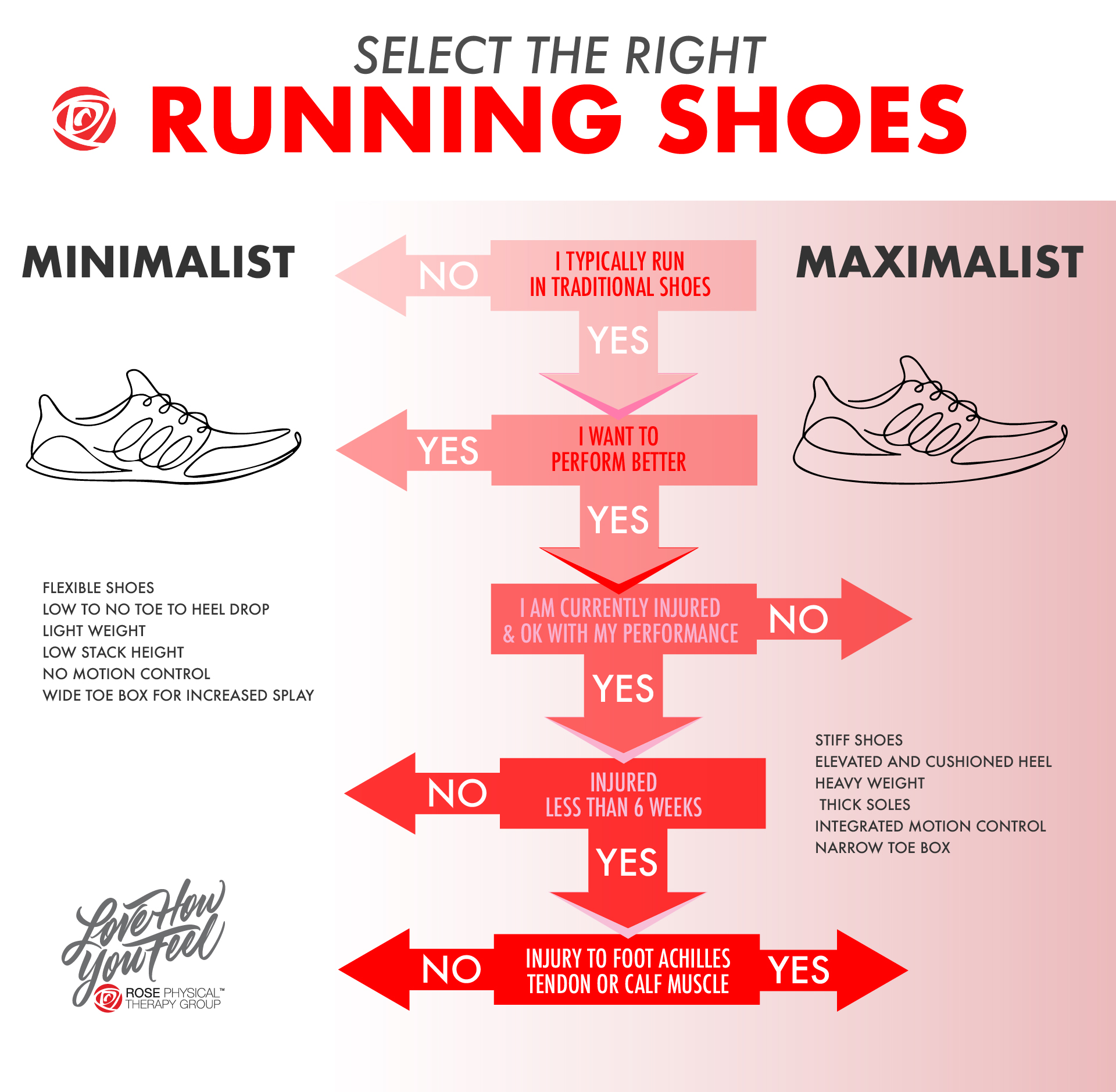
There are three questions to consider in choosing to use minimalist shoes: am I happy with my current running? Am I injured? Do I want to improve my performance?

  1. Am I happy with my current running? If you hare happy with your current run performance and do not want to change anything, do not change to conventional shoes just to do it.
  1. Am I injured? If you are injured this is not a great time to change to a completely new shoe. Work with your Rose physical therapist here in Washington, DC to determine if minimalist shoes can help with your injury recovery, or hinder it.
  1. Do I want to improve run performance? By properly distributing the force of foot strike and allowing for direct muscle power to push from the ground, minimalist shoes can enhance running performance.

A minimalist shoe is footwear that provides minimal interference with the natural movements of the foot due to high flexibility, low heel to toe drop, weight, stack height, absence of motion control and stability devices, and a wider toe box to allow for natural toe splay.

Weight: the lighter the shoe the more minimal it is.

Stack height: measured at the center of the heel it shoes the distance between your heel and the most external part of the outsole underneath. The thinner the show, the more minimal it is.  

Heel to toe drop: the difference between the shoe thickness under your heel to where your toes start. The closer to 0 this difference is, the more minimal the shoe is.

Stability and motion control: this measures the most commonly used technologies to control pronation, the least amount of technology means the more minimal.

Flexibility: the shoe is tested for forward/backward flexibility by bending the front part of the shoe towards the heel. It is also bend in a torsional or side to side motion for the front of the shoe. The more the flexibility, the higher the rating.  

Toe splay: The shoe has a wider toe box allowing for more toe splay. Toes that are splayed well apart confer a large degree of protection from the impact forces experienced during weight-bearing activity by spreading the impact forces out over a larger surface area.

washington dc running minimal shoes shoe minimalist physical therapy

Considerations in evaluating and purchasing minimalist shoes

Although minimal shoes are considered to reduce injury and improve performance, they also include some negative aspects. For instance, minimal shoes create greater impact on your foot and this can increase injury in your metatarsals.

While it is easy to mitigate injuries in your lower extremities that can result from the sudden use of minimalist shoes, this adjustment might require a change in running frequency and/or distance to allow your body to adapt. Changing to minimalist shoes might also require you to change your running form, and this can take time.

It is also important to note that minimalist shoes are not created equal. Due to production considerations, marketing considerations, and other practical factors, many shoe companies choose to not produce zero drop shoes which have a sole that is equal thickness from front to back. To compare shoes, we suggest using the following measurements as a guide.

Rose Physical Therapy is here in Washington, DC to help!

If you have a history of any running related, or lower body injury, or have any questions on running form, shoe selection, or are looking to enhance performance, set up at appointment at Rose Physical Therapy. We offer appointments at either our office in downtown Washington, DC office between Dupont Circle and Farragut Square, or at our office in Navy Yard and Capitol Riverfront, just a few blocks from Capitol Hill.

If you have any questions about your running form, please be sure to inquire about our running analysis. We have developed our running analysis program to be the gold standard in running analysis, as the most effective at improving your performance and reducing injuries.


Read more about Minimalist running shoes can improve running performance

Improve your hiking ankle stability with three easy physical therapy exercises ">Improve your hiking ankle stability with three easy physical therapy exercises

Three physical therapy exercises for ankle stability while hiking in the Washington, DC area are dynamic single leg balances, calf raises, and four-way ankle stretches.

Taking advantage of the great outdoors in the Washington, DC area is a fantastic way to spend the winter months. Hiking allows you to explore nature, get some fresh air, exercise and socialize with friends from a safe social distance, and to get in some fitness. But doing the right physical therapy to prepare yourself for strenuous hikes can make all the difference in your hiking enjoyment!

Depending on the terrain of your hikes and the distance of your hikes it can be difficult on your legs and ankles. In order to prevent any injuries during your hikes, there are a few physical therapy exercises you can start to incorporate into your daily routine. These phyiscal thearpy exercises are quick and will help improve ankle strength and your balance.

  1. Dynamic single leg balance – Balance is important for daily living and very important for hiking as you are walking over uneven ground with lots of rocks and branches that could cause you to get tripped up. Single leg balance can be done anywhere, including while standing in line waiting to get into the store, while standing during a conference call or zoom meeting, or even while petting your pet. To perform, stand on one leg and with the opposite leg point to different points on the ground. Adding in the movement of the non-stance leg adds a more challenging component.
  2. Calf raises – Calf raises are a great exercise to get your calves ready for the increase demand placed on them during a hike. To perform this physical therapy exercise, stand near a wall and place your hands on the wall for stability. Then come as high up on your toes as your can and slowly lower your heels back down to the floor. If you need more of a challenge, you can come up onto toes and then lift one foot off the floor and slowly lower yourself back to the floor with one foot. This is also a great exercise to perform throughout the day when taking breaks from working from home.
  3. 4 way ankle – This exercise requires you to have access to a resistance band. This exercise is great for strengthening all the motions done at the ankle. As the name hints at, there are four directions you will move your ankle in. Placing the resistance band around the ball of your foot the four motions you will perform are as follows:
    1. Plantar flexion – Point your foot down as if you are pressing on a gas pedal.
    2. Dorsiflexion – Bring your toes up towards the sky, you may feel a stretch in the calf.
    3. Inversion – Move your toes towards your other foot.
    4. Eversion – Move your toes out towards the side.

These exercises can be performed everyday once a day and will get your ankle strong for your next hike! If you experience any pain or have concerns about your hiking balance or strength, feel free to give us a call or make an appointment online here on our website. We have physical therapists who can help you at our downtown location between Dupont Circle and Farragut Square, or at our Navy Yard location near to Capitol Hill.

Read more about Improve your hiking ankle stability with three easy physical therapy exercises

How to run in the Washington, DC winter weather ">How to run in the Washington, DC winter weather

To keep running in the winter you need the right gear, a warmup plan, consistency, and to implement cross training for injury prevention and variety.

Running has become exceedingly popular during the summer as an easy way to stay fit while remaining socially distant. One of the hardest things to do for a new runner is to maintain their running fitness as the weather turns from ideal late summer and fall temperatures, to the cold days of winter. I have provided a few tips and recommendations to make this transition easier and to reduce the risk for injury.

  • Get the right gear
  • Warm up prior to starting your run
  • Work on consistency
  • Cross train for injury prevention and activity variety

When I began my running journey the transition to winter running was one of the more difficult challenges. I found the cold weather to be unpleasant for running and my total running time decreased throughout the winter and I lost a lot of the cardio endurance I had built up over the summer. I still have my struggles at times in the winter, and it always takes some time to adjust to the colder temperatures initially, but by implementing the tips above, I have been able to continue to enjoy my running and stay relatively injury free while doing so.

  1. Get the Right Gear

When it comes to running in warmer weather it is usually straight forward when it comes to clothing. Pick some shorts and throw on a shirt and you are good to go. When it comes to cold weather it is a bit more complicated. The general rule of thumb that has worked for me is to dress like it is twenty degrees warmer than the actual temperature to compensate for the warmth you will generate as you are running. I have found keeping my hands warm with gloves to be the most important thing when it comes to gear, but regardless I suggest gear that will keep you warm and stay comfortable while running.

  1. Warm Up Prior to Starting Your Run

A warmup can be useful anytime of the year, but even more so as it gets colder. I found it hard to roll out of a warm bed early in the morning and step outside in the cold air and just start running. The first five to ten minutes were always unpleasant as I would get adjusted to the temperature. Doing a light warmup inside and getting your heart rate up can make the transition easier. Another advantage of doing a light warmup is to loosen up some of the larger muscle groups used during running to reduce the risk of injury. It is harder to loosen up the muscles in colder weather so doing so before a run for a few minutes is an easy thing to do to that can make the start of the run more pleasant.

  1. Work on Consistency

An important aspect of long term running that is true regardless of the weather, but good to emphasize in the colder weather is remaining consistent with runs. What I mean with consistency is week to week it is important to try to avoid large fluctuations in mileage and to keep the number of days with running similar. This is to serve two purposes; both to decrease injury risk and to avoid cessation of running completely. By running around the same distance week to week you will maintain your capacity for running and cardio fitness and avoid increased risk with large increases is mileage. By running a similar number of days per week it is easier to have it remain a habit as opposed to an activity you do at random and thus less likely to continue to do through the winter into the spring as it warms up.

  1. Implement Cross Training

In order to reduce injury risk further and maintain overall body wellness it is important that running is not the only form of exercise you do. This is an area that I have struggled with in the past and has taken time for me to get better at. Whether it is doing some lifting at a gym or body weight exercises at home, it is important to have some other form of exercise that you do on a regular basis. Strength training is a nice complement to running as it can make you faster and loads muscles and bones differently to running, which is important when it comes to remaining injury free. Strength training is a great choice, but it is not the only choice; any other form is exercise is helpful to challenge the body in different ways. However just like with running it is best if you are consistent with whatever exercise you choose, so I suggest picking something enjoyable to you. 

 Hopefully by implementing some of the tips I have provided you will be able to enjoy winter running for all it has to offer and stay injury free. If you are concerned about an injury or some pain you have been experiencing during your runs, contact Rose Physical Therapy Group and get set up an appointment with one of the great therapists to help you with your issue. If you need a running asessment, we usually host those at our downtown clinic location that is located between Farragut Square and Dupont Circle (and is close to most metro lines). But physical therapists at our Navy Yard location, just a few blocks from Capitol Hill, can also help you out. Give ue a call or schedule through our website.

Read more about How to run in the Washington, DC winter weather

Categories

  • Running
  • Back Pain
  • cycling
  • MacKenzie MDT
  • triathlon
  • sprain
  • ergonomics
  • lacrosse
  • Breathing
  • Trigger point dry needling
Three advantages to using Blood Flow Restriction (BFR) after surgery
High Profile: Rollin' with the Casserole Queens
Do I have pelvic floor dysfunction?
Home

Quick Links

Quick Links

  • Home
  • Why Rose
  • Team
  • Locations
  • Blog
  • Store
  • Contact Us

Farragut Square/Dupont Circle

1725 DeSales St. NW, Suite 830, Washington, DC 20036

Capitol Riverfront

1015 Half St. SE Washington, DC 20003

Friendship Heights

5225 Wisconsin Ave NW Suite 202, Washington, DC 20015

Contact Us

P: (202) 630 0378 F: (855) 350 5613  
E: appointments@rosept.com

Copyright © Rose Physical Therapy  . All rights reserved.
Privacy policy
Terms of Use